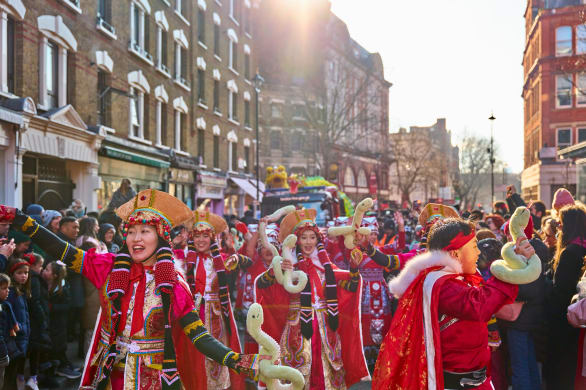
CHINESE NEW YEAR EXPLAINED: HISTORY, TRADITIONS & MEANING
From ancient legends and symbolic rituals to family reunions and festive feasts, discover the stories and traditions behind one of the world's most significant cultural celebrations.
Each year, millions of people around the world welcome a new beginning with family gatherings, elaborate feasts, colourful decorations and traditions passed down through generations. Known as Chinese New Year or Spring Festival, the occasion marks the beginning of a new year in the traditional Chinese calendar and is a time for renewal, reflection and togetherness.
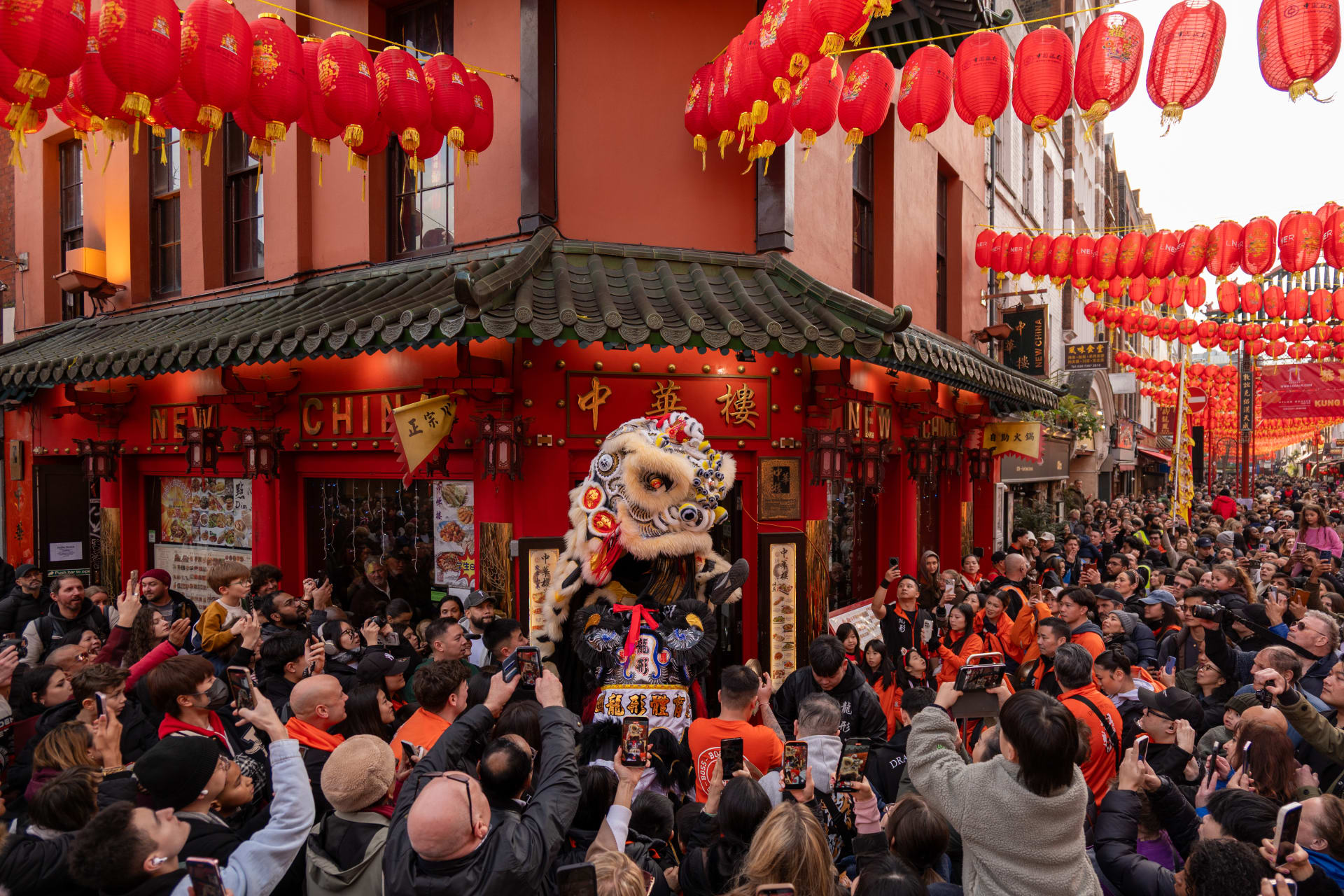
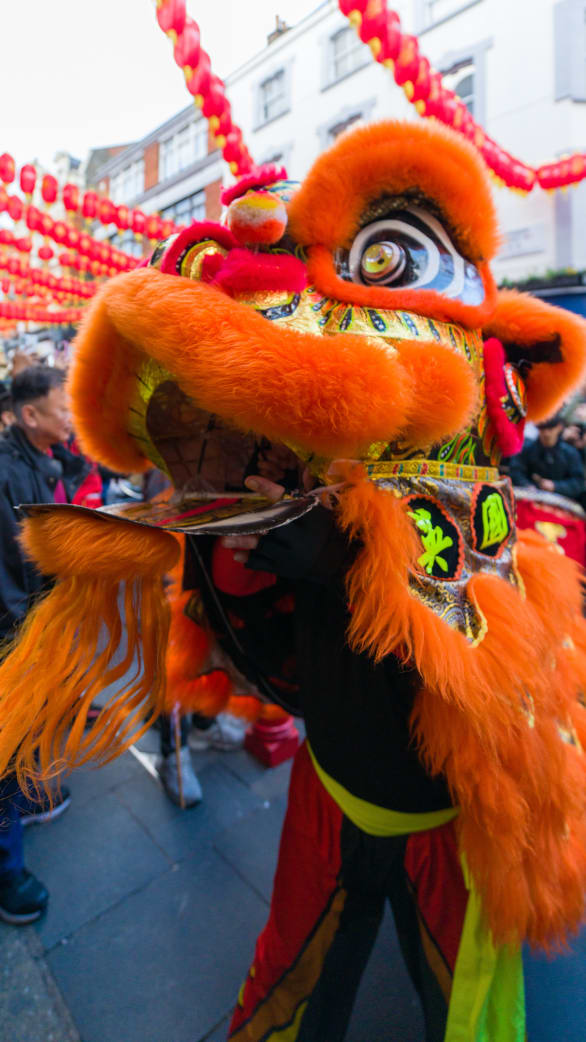
But beyond the red lanterns, dancing dragons and spectacular celebrations lies a rich cultural history shaped by centuries of beliefs, symbolism and family customs. From the meaning behind lucky red envelopes to the significance of the dishes served around the dinner table, almost every element of Chinese New Year tells a story.
Whether you're discovering the festival for the first time or looking to understand the traditions behind the celebrations, here's everything you need to know about Chinese New Year and its enduring cultural significance.
WHAT IS CHINESE NEW YEAR?
Chinese New Year, also known as the Spring Festival (Chūnjié), is the most important traditional festival in China and is celebrated by Chinese communities around the world.
Unlike New Year's Day on 1 January, Chinese New Year follows the traditional Chinese lunisolar calendar, which takes into account both the phases of the moon and the solar year. As a result, its date changes annually, falling between 21 January and 20 February.
The festival marks the beginning of a new lunar year and the arrival of spring in the traditional calendar, symbolising fresh beginnings, good fortune and the opportunity to leave behind the challenges of the previous year.
Although the date itself marks the start of the new year, celebrations traditionally extend over 15 days, culminating in the Lantern Festival.
PATHWAY TO PROSPERITY
Welcome good fortune, good health and a long life into the new year through these symbolic and cultural dishes.
No self-respecting household at Lunar New Year is without most or all of these celebratory foods. While tasty of course, each one comes with its own ritualistic meanings and traditional symbolism. Let’s take a look at eight of the most traditional foods to celebrate Lunar New Year.
NEW YEAR RICE CAKE (NIAN GAO)
As with most Chinese dishes, the north and south have different variations of the iconic nian gao, though it’s always a sticky-sweet cake prepared from glutinous rice. Nian gao were used in ancient times as offerings to the Gods and whilst it can be eaten all year round, here’s what makes the cake so special at this time of the year: ‘nian’ translates to ‘sticky’ but sounds just like ‘year’ when spoken and ‘gao’ means cake but sounds identical to ‘high’. Thus, the cake signifies a ‘higher year’ than the one previous.
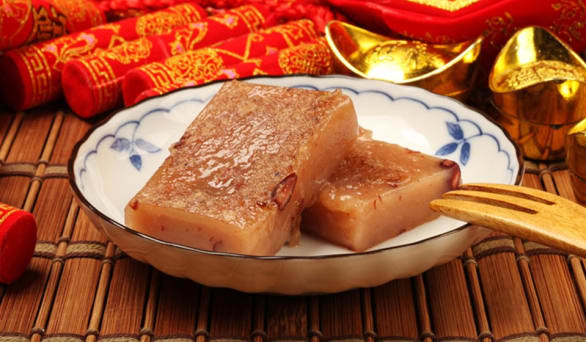
New Year Rice Cakes (Nian Gao) are available at Sakurado London
HOT POT
Spending time with family and loved ones is what underpins Chinese New Year, so communal dining where everyone gets stuck in is the order of the day. There’s no such dish which does this better than a great cauldron of steaming hot pot, around which families can jostle for prime dipping position. A large simmering pot of tasty stew which can be customised and tailored using your favourite ingredients like seafood, pork or chicken which can be added raw and cooked round the table.
Hot Pots can incorporate many different foods which each have their own significant meanings. For example: Roasted pig symbolises peace, duck represents loyalty and tofu symbolises happiness and fortune for the whole family. Vegetables such as seaweed foreshadow wealth and good fortune, bamboo shoots represent longevity and muskmelon and grapefruit symbolise family and hope, wealth and prosperity.
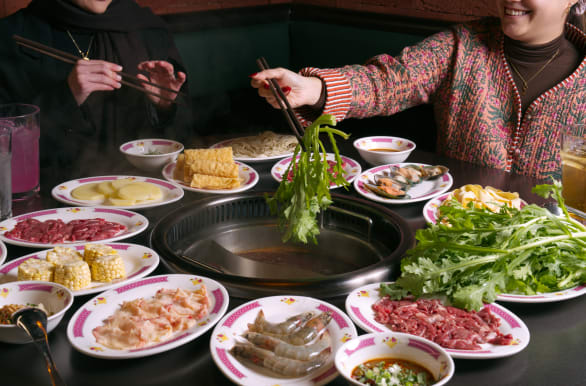
Order hot pot from Ning's Hot Pot
SPRING ROLLS
Deep fried, steamed or baked and variant in shape and size, these little golden parcels are eaten during the Spring Festival to celebrate the coming of Spring. Spring rolls symbolise wealth and good fortune due to the golden colour and shape of each parcel which is said to represent a gold bar. Warm, crispy and full of flavour, these are popular all around the world at any time of the year.
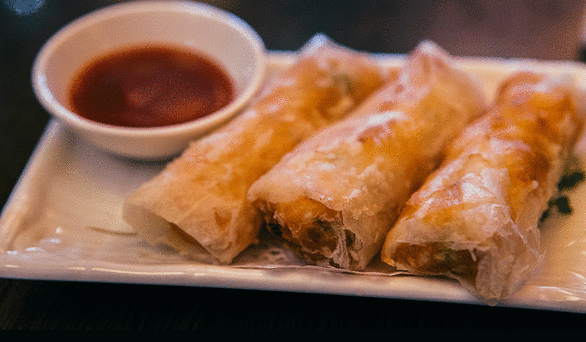
Spring rolls available with shredded vegetables, duck or pork.
CHICKEN
Much like nian gao, chicken is a homonym – in Chinese, ‘chicken’s’ pronunciation is the same as ‘prosperity’. As such chicken dishes are very popular, it’s served on New Year’s Eve dinner, one of the most important meals over the fortnight’s NY celebrations. The chicken feet are said to help you grasp onto wealth, whilst the wings help you to fly higher and the bones represent achievement, so tuck in!
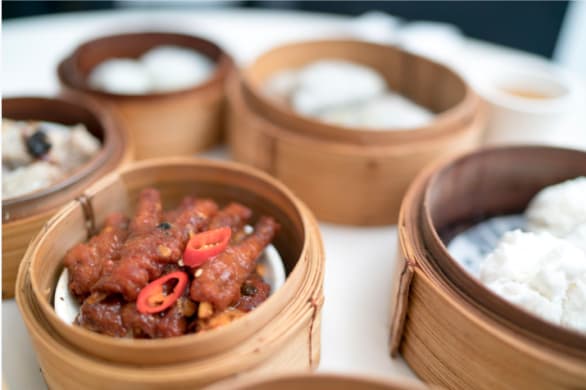
Dumplings' Legend in Chinatown serve a number of chicken dishes including chicken feet.
KUMQUAT
Part of the citrus family, the kumquat is a tiny, olive-shaped fruit resembling something like a micro-orange. Being smaller, the flavour is super concentrated with a zingy sweet-yet-tart tang. Though not as much eaten at Chinese New Year as displayed in the home, families in China will always place a kumquat plant indoors. The fruit’s golden hue signifies the sun and harvest while its round shape represents success.
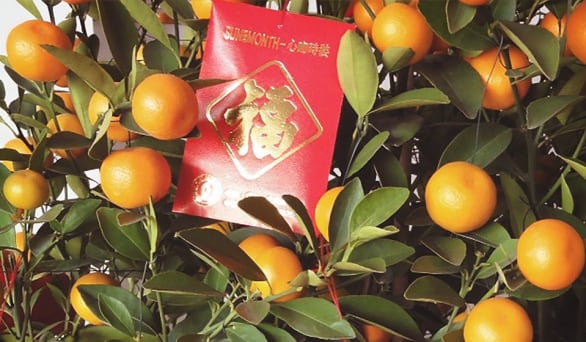
The fruit’s golden hue signifies the harvest while its round shape represents success. Find these at See Woo.
DUMPLINGS
Fried dumplings, steamed dumplings, boiled dumplings in soup: the dumpling opportunities are endless. Regardless of regions, all Chinese will eat dumplings at New Year. Their shape resembles ancient golden ingots, which signify wealth. Occasionally a family member may hide a coin inside to bless the lucky person who receives it with good luck that year. Every family member helps out with the preparation and wrapping of dumplings as a family bonding activity.
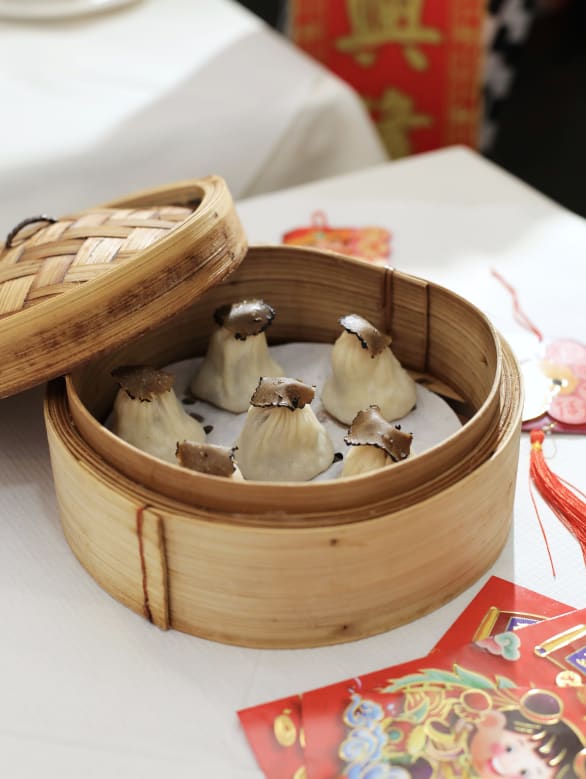
From Dumplings Legend, to Plum Valley you’re spoilt for choice when looking for dumplings in Chinatown.
LONGEVITY NOODLES
What better food to symbolise a long and healthy life than, well, long and healthy noodles? Served much longer than usual and usually uncut, longevity noodles are typically made from wheat as they’re less breakage-prone, Served up in a soup or stir-fried with meat or vegetables and flavoured with sesame and ginger, they’re a delicious celebratory dish.
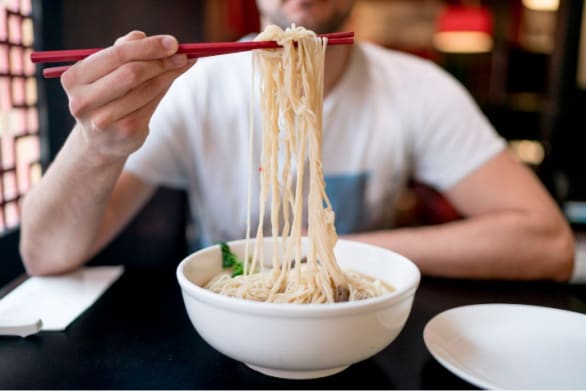
Longevity noodles are a cantonese egg noodle made up of wheat flour.
FISH
An indispensable guest at the Chinese New Year dinner table, the fish, represents a whole and healthy family and is popular – like other dishes – because of its lucky homophonics. Fish’s homophonic ‘yu’ sounds like ‘surplus/abundance’ so it suggests that if there’s surplus food at the end of the year it can only be a good thing. Furthermore, the first character of ‘crucian carp’ sounds like ‘gift’ so it’s considered good luck to eat. Fish motifs and decoration will be everywhere to reign in prosperity for the New Year.
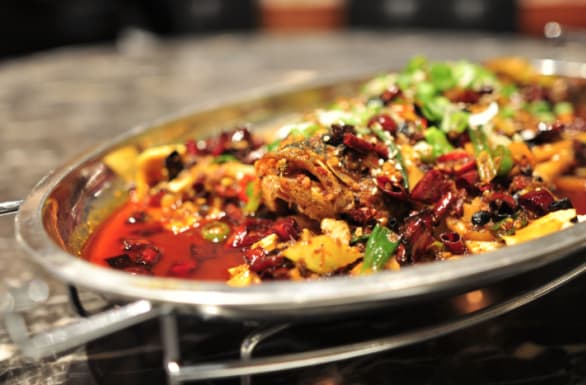
Try this whole steamed seabass with ginger, spring onions and black bean sauce from Szechuan specialists Jin Li.
Chinese New Year Traditions and Their Meanings
Chinese New Year is rich in symbolism, with customs designed to welcome good fortune, strengthen family connections and begin the year on a positive note.
While traditions vary between families and regions, several practices are widely associated with the festival.
1. Spring Cleaning: Making Room for Good Fortune
In the days leading up to Chinese New Year, many families thoroughly clean their homes to symbolically sweep away bad luck and make space for new opportunities.
The timing is important. Traditionally, sweeping on New Year's Day itself is avoided in some households, reflecting the belief that doing so could sweep away the good fortune that has just arrived.
2. Red Decorations and Chinese New Year Couplets
During the festive period, homes and streets are decorated with red lanterns, paper cuttings and banners bearing messages of happiness, health and prosperity.
A particularly meaningful tradition is the display of chunlian, or Spring Festival couplets. These paired lines of Chinese calligraphy are typically placed on either side of a doorway, expressing wishes for a successful and harmonious year ahead.
You may also spot the Chinese character 福 (fú), meaning good fortune or blessing, displayed on doors and windows. In some households, it is placed upside down as a playful visual reference to the arrival of good fortune.
3. Red Envelopes: The Meaning of Hongbao
One of the most anticipated Chinese New Year traditions, particularly among children, is the exchange of red envelopes known as hongbao.
Typically containing money, these envelopes are given by older relatives and married adults to children and younger family members as a gesture of blessing and goodwill.
The significance lies not simply in the money itself, but in the wishes for happiness, protection and prosperity that accompany the gift.
In contemporary celebrations, digital red envelopes have also become popular, allowing families and friends to continue the tradition even when separated by distance.
4. Family Reunions: The Heart of the Celebration
At the centre of Chinese New Year is the reunion dinner, traditionally held on New Year's Eve.
Families gather around the table to share a carefully prepared meal, reconnect with relatives and welcome the coming year together.
For many, the reunion dinner is among the most important moments of the festival. It reflects the values of family unity, gratitude and respect for previous generations.
Across China and within Chinese communities worldwide, the holiday is also associated with significant journeys home as people travel to spend time with loved ones.