
Jimi Famurewa's Guide to Chinatown
From late night spots to and Cantonese classics to quick bites and sweet treats, read restaurant critic, writer and broadcaster, Jimi Famurewa's recommendations for taking on Chinatown's food scene.
Chinatown London represents a migration story in more ways than most of us realise. Though the West End’s familiar, ever-expanding mass of restaurants, businesses and lantern-strung streets is Britain’s most famous East and South East Asian cultural centre, it is actually the capital’s second Chinatown: a district that coalesced and emerged after the Second World War, following the dispersal of an original Chinese diaspora settlement that had first emerged from communities of dockworkers and seamen near Limehouse. Renewal and movement feel like fitting themes for a food neighbourhood that is ever-evolving, ever-shifting and always balances rich history with an embrace of the new.
As a lifelong Londoner, this capacity for reinvention, variety and constant surprise is very much what I’ve always loved about Chinatown. Grand Cantonese dining rooms with Tardis-like proportions and lacquered roasting meats hung in the window. Exuberant dessert bars, boba shops and Chinese bakeries. Upstart Korean grills and new wave hype-magnets proffering everything from fearsomely hot Thai fusion to bouncy, hand-pulled noodles. There can be an almost bewildering limitlessness to Chinatown London; a sense that this gathering of more than 150 businesses has something for every price point, palate, sensibility and mood. Everyone has their secrets, their favourites, their little hacks, recent discoveries and hidden dim-sum palaces. These are the spots where I go to commune with Chinatown London’s past, celebrate its present and get an indescribably delicious taste of its future.
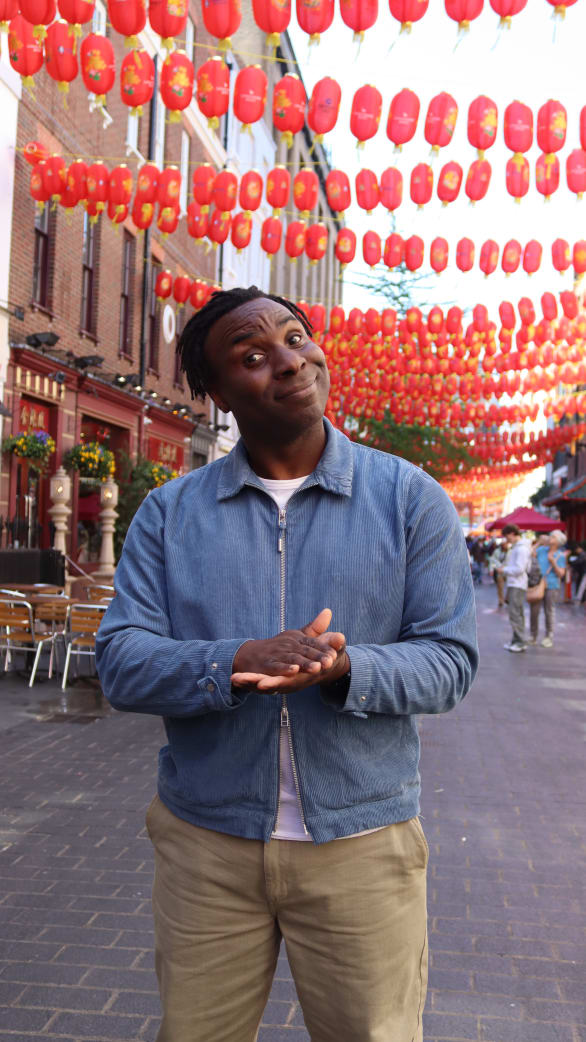
QUICK HITS
KUNG FU BURGER
Where can you find the world’s oldest hamburger? No, not America or even (somewhat spuriously) Germany. Instead, you have to look to China and roujiamo: an time-honoured, street food delicacy of slow-braised meat and herbs nestled in a flaky round of flatbread, that originates in the north central province of Shaanxi and is thought to have roots that stretch back more than 2,000 years. This ancient culinary history is brought bang up to date in the form of this justly hyped hole-in-the-wall spot on Shaftesbury Avenue, tightly wedged between other businesses, and usually ornamented by a restless queue. Their riff on the classic pork, pulverised into deeply succulent pieces, is lots of fun. But I’m particularly partial to the shredded duck: deliriously moreish, flavoursome hunks of bird, smartly undercut by the fresh crunch of cucumber and a luscious, lip-smacking plum sauce.
BUN HOUSE
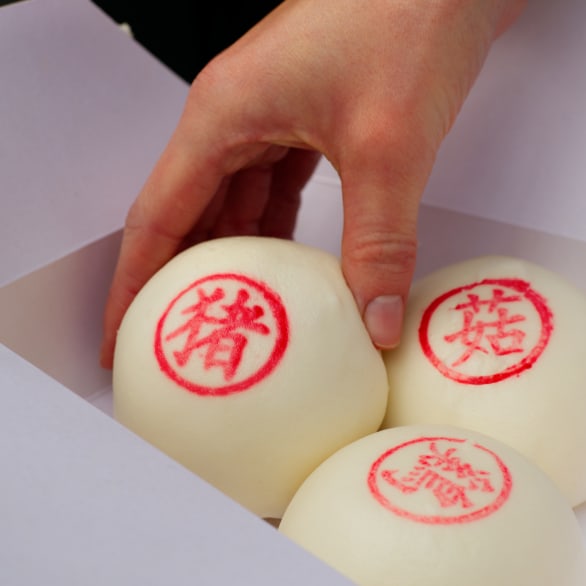
Modernity and history can be awkward bedfellows in the context of a restaurant. But this ever-mobbed Lisle Street spot – visually redolent of Hong Kong’s colonial-era tea rooms – unites them with a sense of playful, design-forward exuberance, plus a tightly edited menu of dim sum dishes and snacks built for both comfort and speed. Unsurprisingly, you are here for the signature Cantonese buns: freshly made, snow-white orbs of steamed dough, stamped with a different hot pink Chinese character, and plugged with a gushing payload of sweet and savoury fillings including cumin-spiked lamb belly and an eternally viral, hazardously messy, molten egg custard. What’s more, if you take away, you’ll be presented with perhaps London’s most stylishly considered to-go box.
GOOD FRIEND
For all that it is most commonly associated with America’s Deep South, fried chicken is a sacred art form in ESEA communities. Thickly cragged karaage; nostalgic, Anglo-Cantonese chicken balls; breathtakingly crisp Korean-style wings, cloaked in a thrumming, gochujang glaze. The debate about which is best could rage for eternity, but the Taiwanese-style fried chicken at this Little Newport Street stalwart – best either turned into a warm bag of popcorn nuggets or hammered into a thin, vast cutlet bigger than most people’s heads and showered in abominably addictive seasoning powders – is truly spectacular. You can’t account for the twists and turns of a night out in Chinatown and Soho. Yet, if it ends with a trip to Good Friend, then you know things will be alright.
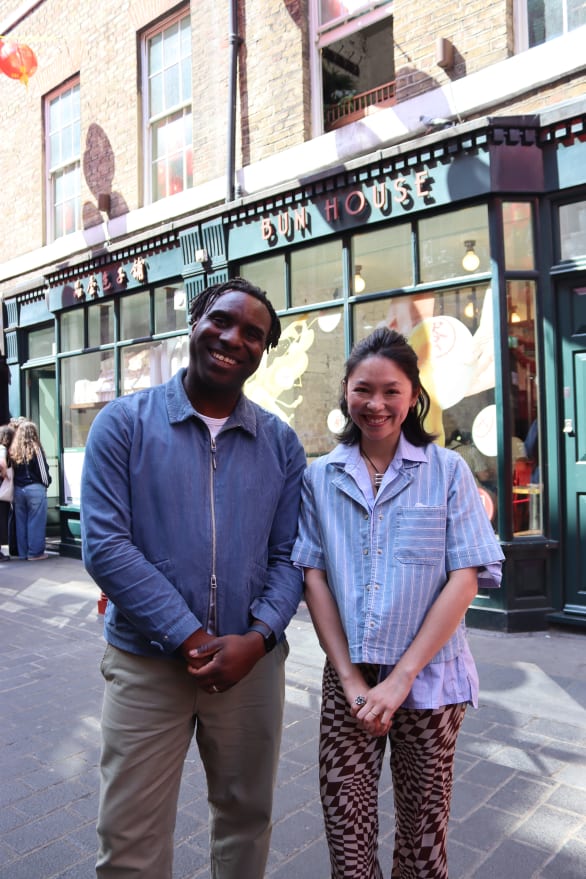
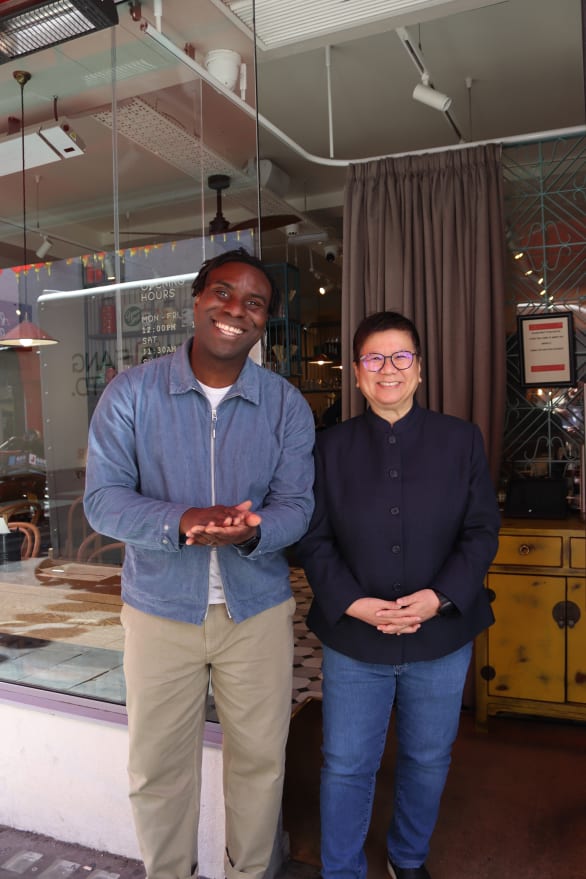
Jimi meets with Z He, owner of Bun House on Lisle Street
LATE-NIGHT DRINKING DENS
EXPERIMENTAL COCKTAIL CLUB
Supposed “speakeasies” can occasionally underwhelm; a very clearly marked entrance giving way to a clunkily themed, disappointingly compact space. This sense of deflation couldn’t be further from the jaw-dropping sense of surprise, awe and anticipation that tends to accompany a first visit to Experimental Cocktail Club’s Gerrard Street address: an unassuming, apparent service entrance that is a doorway to a sprawled, glamorous, 1920s fantasia of exposed brick, textured, blush pink accents and DJs spinning tunes in the flickering gloom. 15 years old, recently revamped and now boosted by late-night sandwiches conceived by Jackson Boxer (think a French onion croque), it’s one of Chinatown’s best kept and most enduring secrets.
SPEEDBOAT BAR
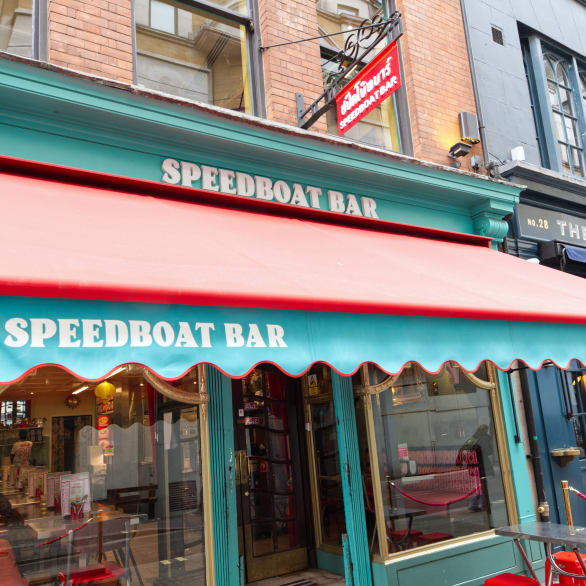
Let’s not get the wrong idea. The kitsch, sharply rendered and frequently incendiary Sino-Thai fusion dishes at Luke Farrell’s Speedboat Bar – inspired by the culturally fluid, fast and furious cuisine of Yaorawat Road, Bangkok’s traditional Chinatown – work just as well in the daytime. But there is something about the meticulously wrought specificity of the atmosphere and the menu here (think a first floor pool table, blaring Thai pop, incendiary minced beef and holy basil stir-fries, plus self-serve Singha beer towers that can be plonked on your table) that has an irrepressible nocturnal energy. There’s even a 12.30am kitchen closing time and a post-10pm happy hour. Duck in towards the end of your night, don’t miss the deep-fried pineapple pie, and prepare to give yourself over to the raucous, technicolour brilliance of it.
NOODLE AND BEER
The essence of Chinatown London is both that it is the home of after-hours eating in that capital, and that lots of terrific, if-you-know-you-know secrets are often lurking in plain sight. Noodle & Beer, an acclaimed Sichuan-inspired spot from entrepreneur Xiaoxiao Wang, very much brought this spirit to the area when it opened in the spring of 2025. On the one hand, its chicly appointed Wardour Street location was merely a highly impressive spot for – as the Ronseal name hints – deep, generous bowls of chilli-flecked blanket noodles, beneath collapsing hunks of intricately spiced braised beef ribs. But, on another, it was also a hidden, subterranean bar (decked out in seductive, theatrically lit crimson like a shadowy boudoir) where, between Thursday and Saturday, diners can order food and whisky highballs until a decidedly dangerous 3.30am. A terrific place to keep in your back pocket and, even in the early stages of its life, a total modern classic.
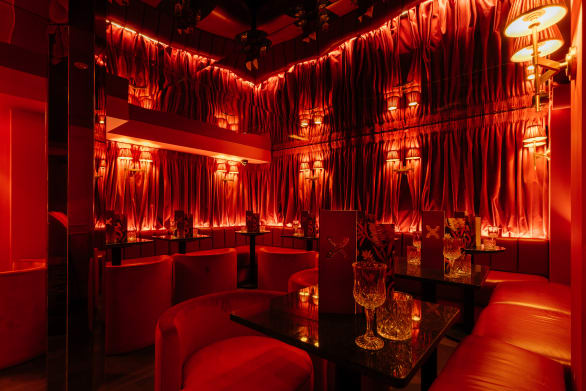
Downstairs in Noodle and Beer
DIM SUM & CANTONESE CLASSICS
WONG KEI
Chances are that if you know anything at all about Wong Kei – the vast, five-storey Cantonese battlecruiser that has had a site in Chinatown since 1972 and now stands proudly on Wardour Street – then you will know about the infamously brusque service. This directness is both fetishised, and overblown but also, crucially, an integral part of Wong Kei’s enduring charm. Consistent, skilled, fast-paced, improbably cheap and ever-buzzing, there is little that can’t be soothed by an impromptu visit to the noisy thrum of the ground floor dining room for a scalding, complimentary pot of tea, folded roasted meats on a distinctive melamine plate of warm rice, and a lavish drizzle of housemade chilli oil. It is the city’s enduring Anglo-Chinese canteen, a living piece of history, and a place that every Londoner should add to their regular dining rotation.
TAO TAO JU
One of the flipside’s of Chinatown London’s more recent embrace of a vivid multitude of wider ESEA cuisines is that some of the highly skilled, traditional Cantonese gastronomy that once formed its bedrock has faded a little from view. This deceptively cavernous cult favourite, set back from the constant hubbub of Lisle Street, is where to go for that unapologetically old school dim sum fix. Founded in 2011 by the Tang family – and now run with charm and digital age savvy by indefatigable second-generation owner, Anthony – Tao Tao Ju celebrates the dextrous art of dumpling making and homestyle Cantonese cooking through a sprawling, consistent menu, the odd Sichuan flourish, and bamboo steamers piled high at every table in its ever-packed, air-conditioned rooms. Do not miss the spurting, immaculately crimped xialongbao or the peerless XO fried turnip cakes.
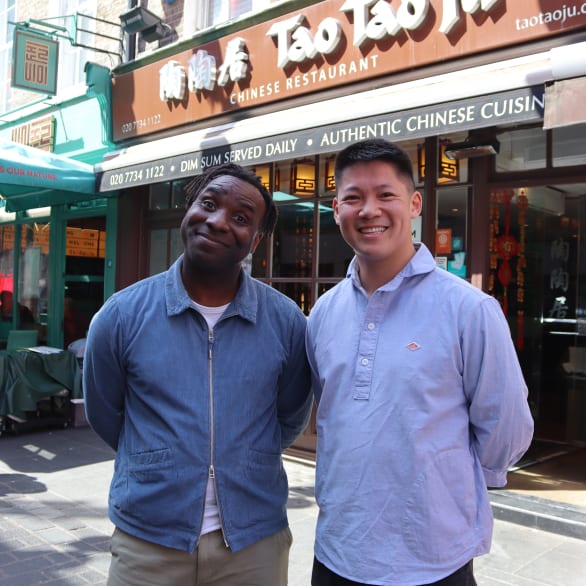
Jimi meets owner Anthony (known as Mr. Tao Tao Ju-nior)
DUMPLINGS' LEGEND
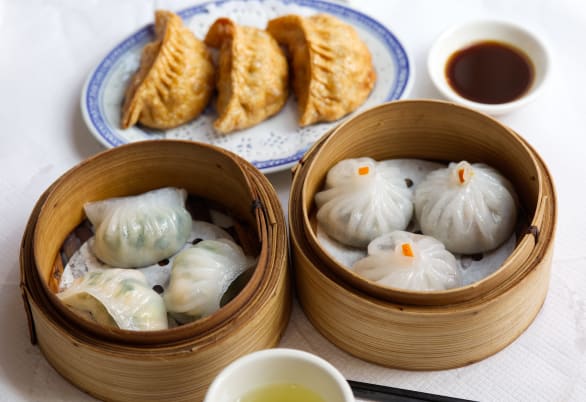
Trembling, delicately pleated pork xiaolongbao. Cloud-like puffs of rich, sticky-sweet char sui pork buns. Slippery fried dough cheung fun, scattered with sesame seeds. Few places showcase the multitudinous world of dumplings – and plenty more classic Chinese dishes besides – like this longstanding dim sum palace on Gerrard Street. Founder Geoff Leong (who also brought us the more Taiwanese-coded Leong’s Legend, a little way along the same street) has been operating here since the mid-1990s, and Dumplings Legend has long reflected the way that diners have broadened their regional Chinese horizons, while also paying consistent homage to the textural variety, dazzling skill and table-swamping generosity (this is absolutely somewhere to improve your plate-Tetris skills) that so many people associate with Chinatown. About as close as it gets to a rite of passage in these parts.
ESEA ADVENTURES
PHO AND BUN
Think the conversation about serious Vietnamese food in London starts and finishes with places in the south of the city or along the ‘pho mile’ near Hoxton’s Kingsland Road? Well, this Shaftesbury Avenue spot – open since 2015 – might just prompt you to reconsider. As you’d hope, the signature pho is uncommonly good: a crystalline, fragrant broth hopping with the clean, deep flavour of patiently simmered stock. But if there is a surprise then it is the innovative ‘burgers’, lavishly charred beef patties, slicked in a smoky housemade mayonnaise and nestled in gently steamed buns made from Taiwanese/style gua bao. They are the culture-splicing spirit of modern Chinatown in two or three highly satisfying bites.
RASA SAYANG
Hard as it is to imagine now, Chinatown London was once something of a desert when it came to authentic Malaysian and Singaporean cuisine. If you are looking for a big reason why it now teems with fragrant plates of nasi lemak and flaky, buttery roti canai, then you need look no further than Rasa Sayang: serial restaurateur Ellen Chew’s acclaimed love letter to homestyle Straits cuisine at its most comforting and uncompromising. Established on the shoulder of Macclesfield Street since late 2008, it has since soothed homesick southeast Asians and turned a new generation on to the pleasures of seafood-clogged bowls of wat tan hor, proper Singapore chilli crab, and beef rendangs with a sweet, luscious thwack of coconut.
OLLE - KOREAN BARBECUE
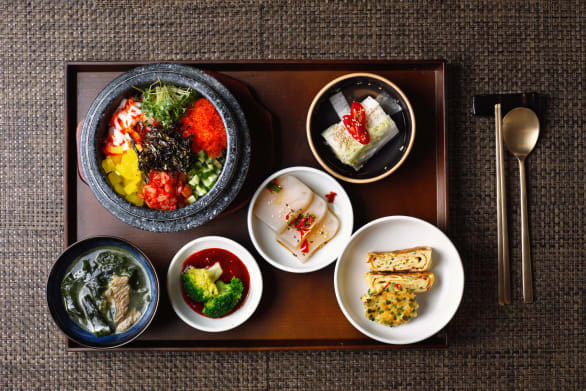
From corn dogs to kimchi, bibimbap to gouchijang, tteokbokki to soju-fuelled pocha bars. Few culinary and cultural influences have shaped modern Chinatown as much as the hallyu, or Korean wave, that has engulfed much of the wider world’s cultural landscape over the last decade or so. Though there are many places you can explore the country’s culinary impact, few are as deliriously fun for a crowd as Olle: a prominent, Shaftesbury Avenue corner site famed for its DIY tabletop grills, impeccable sourcing and popularity among the K-pop stars that frequently pass through London. Don’t skip the outrageously prime wagyu, listen to your server’s grilling advice, and keep your eyes peeled for a member of BTS faceplanting a bowl of kimchi jjigae.
SWEET TREATS & DESSERTS
CHINATOWN BAKERY
I could give you the address of Chinatown Bakery’s two locations – both lying just a few doors down from each other amid the hubbub of Wardour Street. However, truthfully, you’re probably just as well looking out for the scrum of influencers clutching ring lights, clipping on microphones and trying to get the best possible shot of a hulking, unearthly wedge of pastel green pandan cake. This is one of those rare occasions when something guaranteed to do numbers on social media actually delivers in the taste department. The roast pork bolo bao is balanced on a knife edge of sticky-sweet and deeply savoury. The custard spurting mini taikyaki – little fish-shaped waffle parcels – are made fresh to order. And that pandan cake delivers ethereal softness and an unforgettable rush of buttery, delicately perfumed sweetness. Unbeatable.
AROME
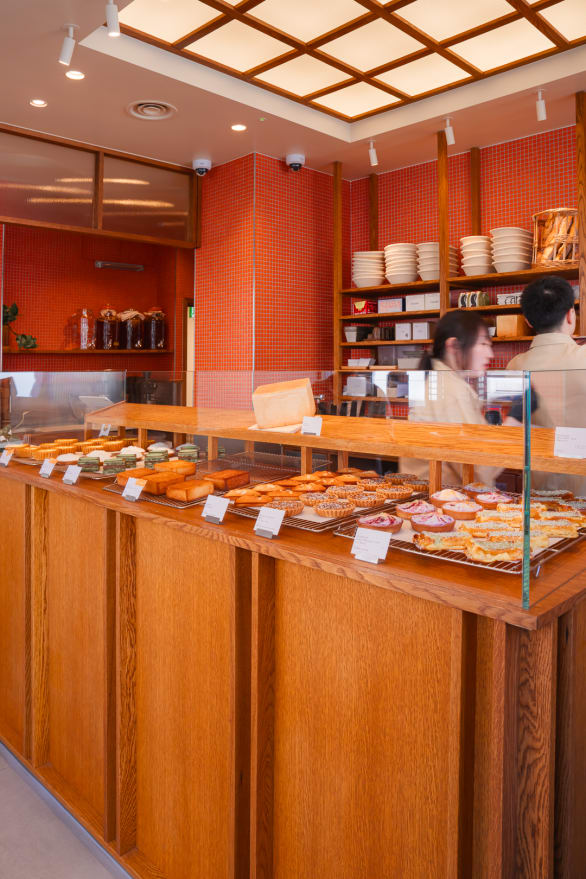
What do you get if you combine the techniques and traditions of viennoiserie and classic pastry making with the distinctive flavour profiles of South East and East Asia? Well, it might look something like Arôme: Ellen Chew’s sumptuously designed celebration of tempting, French-Asian baked goods. Formed from a professional partnership between the Rasa Sayang founder and French pattisier Alix Andre, this outpost descended on the corner of Shaftesbury Avenue and Macclesfield Street in spring 2026 and the queues and hubbub have barely slowed down since. Doorstopper thick slabs of honey butter toast; tightly wound swirls of miso and bacon pastry; dextrously laminated buns filled with coconut rice pudding, rhubarb jam and coconut cremeux. It is east meets west but also just very, very London.
MAMASONS
Before ube – a fragrant, naturally mauve-hued yam used in a range of dishes all across East and South East Asian cultures – began its purple reign as the internet’s favourite ingredient, it was being spotlighted by this exceptional, Filipino-inspired spot. A must-visit among the bakeries, bubble waffle vendors and confectioners along Newport Court (aka Chinatown’s dessert alley), Mamasons has a knack for bringing unexpected craft and balance to overblown creations like foam green pandan milkshakes and halo halo, a hectic sundae piled high with coconut strings, shaved ice, leche flan and other playful fixings. If you are here though, you need to make sure you have the bilog: a buttery, warm bun, filled edge-to-edge with a jolting pat of purple ube ice cream. It may give you brain freeze. It’ll be totally worth it.
