Loading search results...

THE HISTORY OF CHINATOWN

From its early beginnings in London's East End to the vibrant cultural destination it is today, discover the people, places and stories that have shaped Chinatown London across generations.

Chinatown through the years

Chinatown’s colourful history stretches back long before the Chinese community of restaurants and businesses popped up in the 1950s. It was the birthplace of the Post Office, Ronnie Scott’s and the playground of the literary elite.

THE BEGINNING

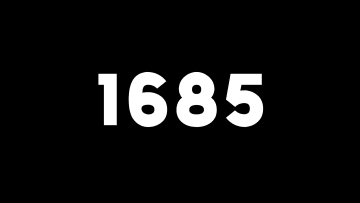
Following the Great Fire of London, development spread westwards and land owned by Lord Gerrard was transformed into new housing. Gerrard Street was completed in 1685, helping to establish the area that would later become Soho, and centuries later, Chinatown.

A CREATIVE HUB

Within a century it was one of London’s hotspots – a haunt for artists, authors and politicos who put the world to rights at the Turk’s Head Inn over many-a boozy tipple. Not just popular with London’s intelligentsia, the area was a magnet for immigrant communities like the French Huguenots.

FIRST SETTLERS

The first Chinese settlers arrived in London during the 18th century, establishing a community in Limehouse in the East End. This became London's original Chinatown and laid the foundations for the Capital's Chinese cultural presence.

EAST END ROOTS

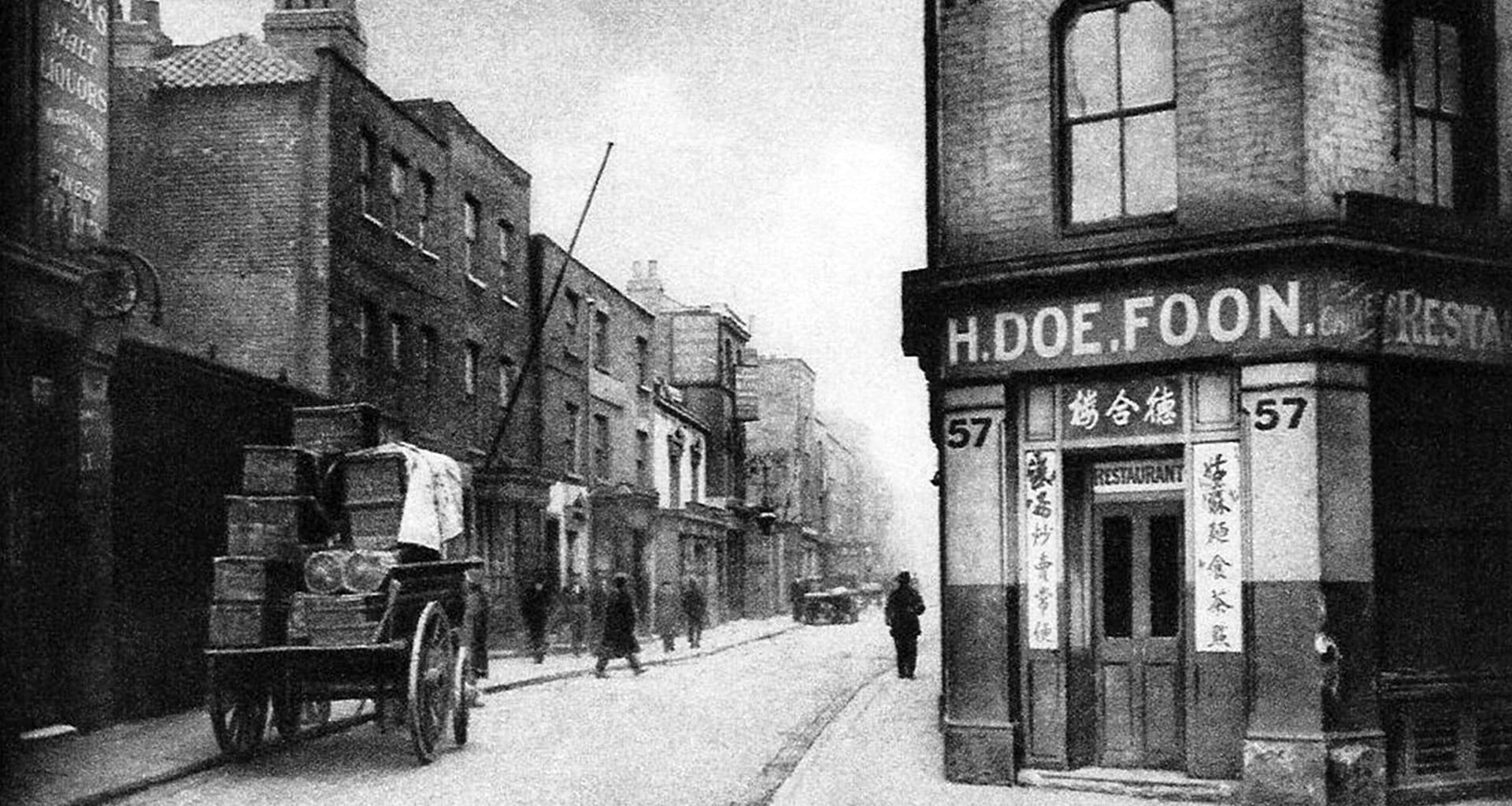
By 1914, Limehouse was home to a growing Chinese community, with restaurants, lodging houses and shops serving sailors and residents arriving through London's docks.

CULTURAL BLOOM

During the late 1800's new waves of immigrants followed; Italian, Jewish and Maltese immigrants settled in Soho. By the 1920's, Gerrard Street had become a centre of London's nightlife, home to the legendary 43 Club run by Kate Meyrick and, later, the first jazz club founded by Ronnie Scott, cementing Soho's reputation as one of the capital's most vibrant cultural districts.

SOHO BOUND

The aerial bombing of London’s East End causes so much damage to the Limehouse community that it begins to move west to present-day Chinatown in Soho.

CHINATOWN BEGINS

Post-war London’s Chinese community were short of income and even shorter of a place to live. When they arrived to the area in the 1950s, it’d gained a reputation for great nightlife and cheap commercial rents. Luckily for them, British soldiers returning from the Far East had fallen hard for Chinese cuisine and so up sprung supermarkets and restaurants. Their success attracted more Chinese entrepreneurs away from the East End to seek their fortunes, and the Chinatown of today was born.

COMMUNITY HUB

By the late 1960s, Chinatown was truly established as the epicentre of London’s Chinese community – now numbering in the tens of thousands as more and more Chinese workers arrived from the British territory of Hong Kong. By now a Far Eastern travel agency set up shop to cater for the ever-arriving number of restaurant workers.

BEYOND THE RESTAURANTS

In 1970 A Daily Telegraph article titled 'The Strange Community of Gerrard Street' highlights Chinatown’s evolution from a restaurant district into a thriving community. Early 1970s community life continues to grow with Chinese-language schools, while local clubs and cinemas host popular Chinese film screenings. In 1978 The London Chinese Chinatown Association is formed to promote stronger links between Chinatown’s community and the City Council, Police and the community outside of Soho.

A NEW IDENTITY

In the 1980s the area got the full Chinatown treatment; Chinese gates, street furniture and a pavilion were added, giving Chinatown much of its recognisable identity today. Plus Gerrard Street, parts of Newport Place and Macclesfield Street became pedestrianised.

GLOBAL DESTINATION

Today, Chinatown London is a vibrant cultural quarter, home to renowned restaurants, supermarkets, bakeries, shops and business celebrating Chinese and East Asian culture in the heart of the West End.

A Stroll Through the History of the Streets of Chinatown

Before the red gates, the viral desserts, and hosting Europe’s largest Chinese New Year celebration, Chinatown London was a low-key enclave in the East End. That was circa the 18th and 19th century, when the small community comprised mainly Chinese sailors who settled in Limehouse after being discharged from British shipping companies. The area was defined by poverty, small-scale commerce, and intense cultural scapegoating. How did it morph into one of London’s most vibrant and visited destinations? We journey through the history of Chinatown and its storied streets to find out.

RUPERT STREET & RUPERT COURT

Originally named in 1677 after Prince Rupert of the Rhine, Rupert Street has long been at the heart of London’s entertainment and nightlife scene. Today, the street has two distinct personalities. At the northern end, you’ll find Soho’s famously inclusive LGBTQ+ scene. Head south into Chinatown and right in the heart of Soho, you’ll discover popular spots like Speedboat Bar, Ning’s Hot Pot, and the brand new Darjeeling Express. But tucked away in the middle of it all is Rupert Court, a narrow passage connecting Rupert Street and Wardour Street. Along this hidden alleyway, you’ll find Malaysian favourite C&R Café and Grocery Store, Step In Reflexology, and buzzy Korean BBQ spot Pochawa Grill.

WARDOUR STREET

Wardour Street has been part of Soho for over 300 years. Originally known for its antique dealers, it later became the heart of Britain’s film industry, with more than 40 film production and distribution companies once based here. Today, it’s one of the main gateways into Chinatown London. You know you’ve arrived when you pass beneath the iconic Chinatown Gate. Completed in 2016, it’s the largest Chinese-style gate in the UK.

Here on Wardour Street there’s 250 years of Suzhou culinary heritage at Song He Lou, Hong Kong-style waffles at Bubblewrap, Korean street food at Bunsik, fresh sushi at Sushinoya, late-night noodles and drinks at Noodle & Beer, and even a Guinness delivered by mini lift at Waxy’s Little Sister.

NEWPORT PLACE & NEWPORT COURT

Fact: Newport Place was never actually supposed to exist. In the 1620s, an illegally built mansion stood here, and after centuries of decline and demolition, it was transformed into the bustling pedestrianised square we know today. Now visitors from all over the world come to enjoy the atmosphere and restaurants that line the edges. You’ll find Canton, which has resided for over 70 years, alongside High Yaki for Japanese BBQ, JJ Buffet for all-you-can-eat dining, Chinatown Bakery for Cantonese baked goods and JinLi for authentic Sichuan cuisine.

Newport Court was once a row of butchers’ shops. Over time, they cleared out, and now it’s more famously known as ‘Dessert Alley’. Wander down and you’ll discover a world of East and Southeast Asian desserts, including Mamasons Dirty Ice Cream for viral Filipino ube treats, Kova for Japanese fusion patisserie and their famous cheezo tea, Tsujiri for all things matcha, Taiyakiya for fish-shaped stuffed cakes, and Happy Lemon and Cuppacha for bubble tea.
GERRARD STREET

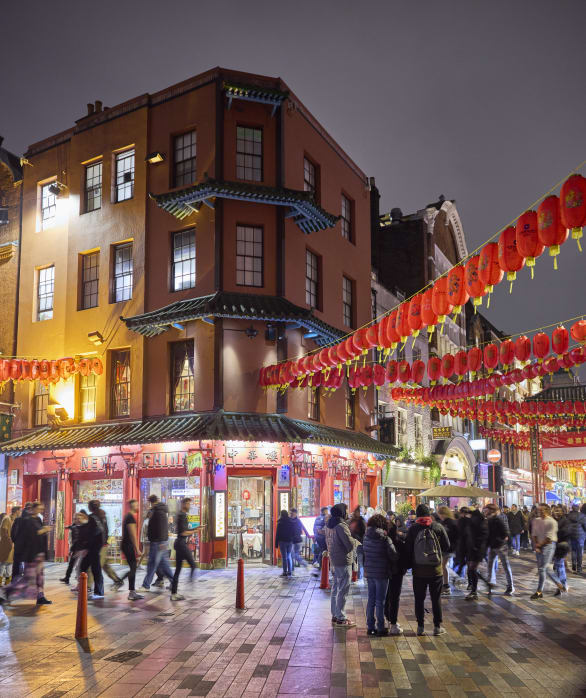
Gerrard Street in the heart of Chinatown London is linked to some of the city’s most famous thinkers. From poet John Dryden to philosopher Edmund Burke to Samuel Johnson’s literary circle – this was once a very intellectual postcode in the centre of Soho.  Today, it’s one of the most photographed streets in London, framed by the iconic gates and stretches of red lanterns. The iconic restaurants that line it include Plum Valley, Dumplings’ Legend, San Hao, and Shu Xiangge. The street is also home to two hidden late-night speakeasy bars; Opium and Experimental Cocktail Club.


THIS IS WECHAT

Scan the QR code to follow Chinatown on WeChat

Main Navigation